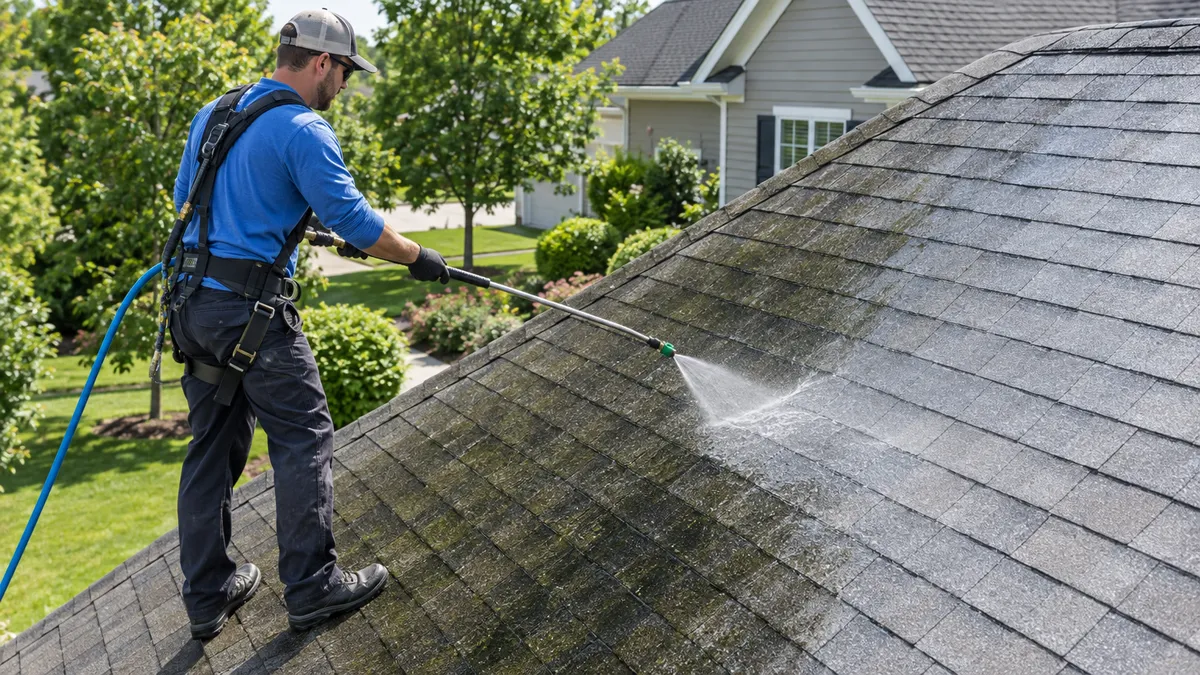
Those Black Streaks on Your Roof Aren't Dirt — What They Are and How to Remove Them Safely
That Dark Staining on Your Roof Has a Name
If you've noticed dark streaks running down your shingles — especially on the north-facing or shaded sections of your roof — you're not imagining it, and it's not simply grime from the weather. Those streaks are almost certainly a colony of airborne algae called Gloeocapsa magma, and they're one of the most common roofing complaints among homeowners throughout the Capital Region.
The algae feeds on the limestone filler used in asphalt shingles. As the colonies grow and spread, they produce a dark pigmented outer shell to protect themselves from ultraviolet light — and that's exactly what you're seeing from the ground. The streaks tend to start small near the roof ridge and gradually migrate downward, growing wider and darker with each passing season.
Why This Happens More in Upstate New York
The Capital Region's climate creates ideal conditions for roof algae. Humid summers, heavy spring moisture, and extended shade from surrounding trees all encourage growth. North-facing roof slopes that don't get consistent afternoon sun are especially prone because they stay damp longer after rain or morning dew.
Moss and lichen are also common in the region and are related but distinct problems. Moss grows in thick, soft mats — usually visible in shaded areas — while lichen forms flat, crusty patches that bond tightly to shingle surfaces. All three organisms thrive in the same moist, shaded conditions that much of Upstate New York provides.
Is It Actually a Problem, or Just Cosmetic?
It's both, and it's worth taking seriously on both counts.
Cosmetic Impact
A streaked, stained roof significantly reduces a home's curb appeal. If you're thinking about selling your home, a discolored roof can raise questions for buyers even when the structure itself is sound. First impressions matter, and a roof covered in dark algae streaking rarely makes a good one.
Structural and Material Impact
Beyond appearances, algae and moss hold moisture against shingle surfaces. Over time, that sustained moisture can degrade the granules on asphalt shingles — the small stone particles that protect the underlying material from UV exposure and weather. As those granules wear away, shingles become more brittle and vulnerable.
Moss, in particular, can work its way under shingle edges as it grows, creating pathways for water to infiltrate the roof deck beneath. Left long enough, what started as an aesthetic problem can lead to premature shingle wear and potential moisture issues inside the home.
The good news is that regular professional cleaning prevents all of this before it becomes a costly repair.
The Right Way to Clean a Roof — and the Wrong Way
This is where homeowners sometimes make a damaging mistake: using a pressure washer on their shingles.
Why High-Pressure Washing Damages Roofs
Asphalt shingles are not designed to withstand direct high-pressure water. A standard pressure washer can strip granules off shingles, void manufacturer warranties, and accelerate the wear process you were trying to prevent. In some cases, high-pressure spray can also force water up under shingles or into flashing gaps.
For most roofing surfaces — especially asphalt shingles — the correct cleaning method is soft washing.
What Soft Washing Actually Is
Soft washing uses low-pressure water combined with a professional-grade cleaning solution to kill and remove algae, mold, mildew, moss, and lichen at the source. The solution breaks down organic growth at a biological level, and the gentle rinse removes it without putting any physical stress on the shingles themselves.
The result is a clean roof without the risk of granule loss, cracked shingles, or water intrusion from overpressure. It's also longer-lasting than a simple rinse — because the organisms are actually killed rather than temporarily displaced.
Can You DIY Roof Algae Removal?
Some homeowners attempt to treat their roof with diluted bleach solutions applied from a garden sprayer. While this can work to some degree, there are real considerations to weigh:
- Safety: Working on a roof — especially a wet one — is genuinely dangerous without proper equipment and training.
- Runoff: Cleaning solutions can affect landscaping, gutters, and nearby surfaces if not properly managed.
- Effectiveness: Consumer-grade products and application methods often don't match the results of professional-grade treatments, and incomplete treatment means faster regrowth.
- Warranty risk: Some shingle manufacturers specify cleaning methods in their warranty terms. Improper treatment can create complications.
For most homeowners, professional roof cleaning is simply the safer and more effective path — both for the result and for personal safety.
How Often Should a Roof Be Cleaned?
It depends on the roof's exposure. A south-facing roof with no overhead tree cover may stay clean for several years before algae becomes visible. A north-facing roof surrounded by mature trees in Albany or Delmar might show significant staining within a season or two.
A practical approach for most Capital Region homeowners:
- Visually inspect the roof from the ground each spring and fall.
- Schedule professional cleaning when streaking, moss, or lichen becomes visible — don't wait for it to become severe.
- Consider a maintenance cleaning every 2–3 years on roofs prone to algae growth.
Catching it early means less buildup to remove, lower cleaning costs, and longer shingle life.
What About Algae-Resistant Shingles?
Many newer asphalt shingle products are manufactured with copper granules embedded in the surface. Copper is a natural algae inhibitor, and these shingles do tend to resist staining longer than standard shingles. If you're replacing a roof in the near future, it's worth asking about algae-resistant options.
That said, even algae-resistant shingles are not permanently immune — especially in heavily shaded or high-humidity environments like much of the Capital Region. Periodic professional cleaning remains worthwhile regardless of shingle type.
Getting Your Roof Cleaned in the Capital Region
Roof cleaning is most commonly done in late spring, summer, and early fall when conditions are dry enough to work safely and the cleaning solutions can act effectively. Here in the Capital Region, late summer and early fall — right now — is actually a smart time to address roof algae. Cleaning before winter removes accumulated biological growth before it spends another season retaining moisture against your shingles through freeze-thaw cycles.
Under Pressure Washing 518 provides professional roof cleaning services for homeowners throughout Albany, Troy, Watervliet, Clifton Park, Latham, Delmar, and surrounding communities. We use soft washing methods appropriate for asphalt shingles and other roofing materials — no high-pressure spray, no unnecessary risk to your roof.
If your roof is showing dark streaks, moss patches, or discoloration, it's worth addressing now rather than watching it spread through another season. Request a free estimate and we'll take a look at what your roof needs.
