Why Your Concrete Driveway Looks Worse Every Year — And What to Do About It
Your concrete driveway takes a beating. Every day it absorbs vehicle traffic, motor oil, road salt, rain, UV exposure, and biological growth — and it shows. If your driveway looks noticeably worse than it did a few years ago, you're not imagining it.
The good news is that most driveway discoloration and staining is reversible with professional cleaning. But understanding what's actually happening to your concrete is the first step.
Why Concrete Driveways Stain and Discolor Over Time
Concrete is a porous material. Unlike sealed asphalt or painted surfaces, unsealed or lightly sealed concrete absorbs everything that sits on it — water, oil, minerals, biological matter, and road chemicals. Over time, these materials accumulate in the pores and create the staining patterns most homeowners notice.
Oil and Grease Stains
Oil drips from vehicles are one of the most common causes of driveway discoloration. Even a small, slow leak leaves behind a darkened spot that deepens with every rain cycle. Once oil penetrates the concrete surface, it bonds with the material and resists ordinary rinsing. These stains are visible, persistent, and get worse without intervention.
Algae, Mold, and Mildew Growth
In the Capital Region, moisture and shade combine to create ideal conditions for biological growth on outdoor concrete surfaces. Algae, mold, and mildew establish themselves in the pores and surface texture of concrete driveways — particularly in areas that don't get full sun. The result is the dark green or black discoloration that commonly appears along driveway edges, in shaded sections, or near downspouts.
Beyond aesthetics, this growth creates a slippery surface that can be a genuine safety hazard, especially in wet or icy conditions.
Road Salt and Winter Chemical Residue
Capital Region winters mean months of road salt, ice melt chemicals, and winter-grade sand tracked onto driveways. Salt accelerates surface degradation and leaves behind a white, chalky residue called efflorescence — a mineral deposit that forms when water carries salts through the concrete and deposits them on the surface as it evaporates.
Over several winters, this process contributes to a concrete surface that looks faded, blotchy, and worn even if the underlying material is structurally sound.
Tire Marks and Rubber Deposits
Vehicle tires leave behind rubber deposits and oxidation marks, particularly near the point where vehicles turn or brake. These marks accumulate gradually and contribute to an overall aged appearance that doesn't come off with a garden hose.
General Surface Dirt and Environmental Buildup
Beyond specific stains, concrete driveways collect general environmental debris — dust, pollen, leaves, organic matter — that settles into the surface texture over time. Rain pushes this material deeper into the concrete rather than washing it away. The result is a progressively darker, dirtier baseline appearance that compounds each season.
Why It Gets Worse Faster Than You'd Expect
Here's something most homeowners don't realize: concrete staining is cumulative and self-reinforcing.
Once the pores of a concrete surface are partially filled with oil, algae, or mineral deposits, new materials have even more to bond with. The surface becomes slightly rougher as the top layer degrades, which gives dirt and biological growth more surface area to attach to. Each season of neglect makes the next season's staining more aggressive.
This is why a driveway that looked merely dirty three years ago might look almost beyond help today — even though nothing dramatic happened to it. Time and compounding buildup are the culprit.
What Professional Concrete Cleaning Actually Does
Professional driveway cleaning uses the right combination of equipment, technique, and cleaning solutions to address multiple types of staining — not just surface dirt.
Pressure Washing with a Surface Cleaner
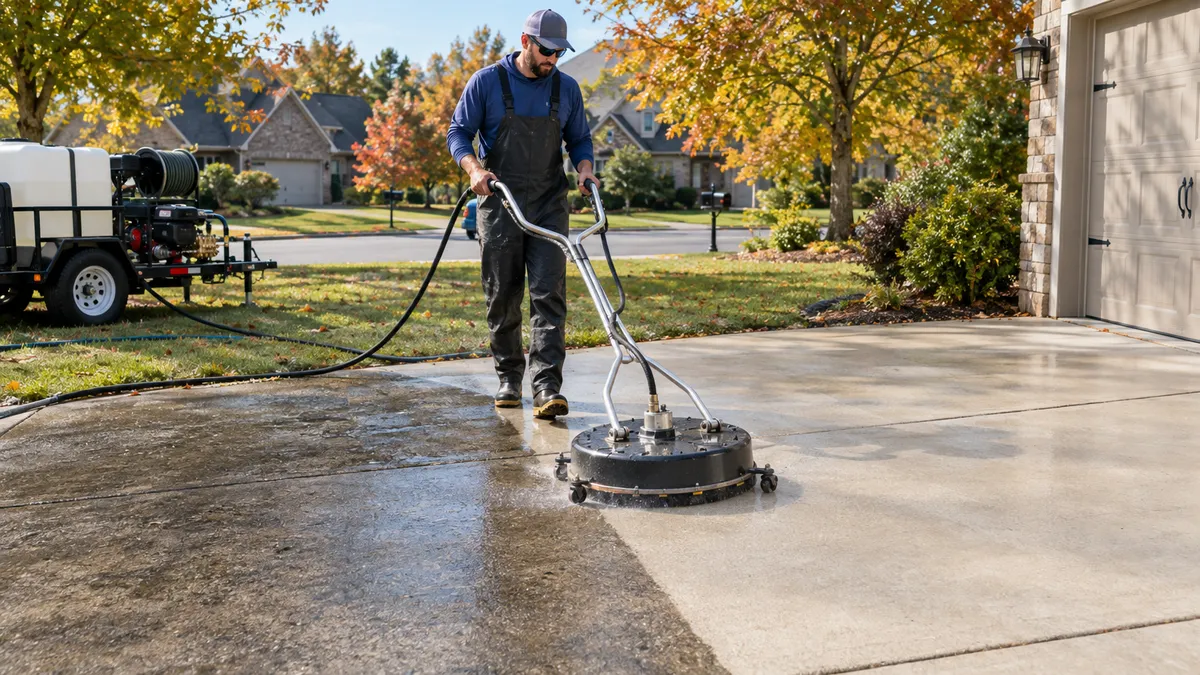
A surface cleaner attachment is a rotating, disk-shaped tool that covers a wide cleaning path with consistent pressure, eliminating the streaky lines that result from a single wand pass. This technique lifts embedded surface contamination efficiently and delivers a uniform result across the full driveway area.
Pre-Treatment for Organic Growth and Stains
For driveways with heavy algae, mold, or oil staining, pre-treatment with appropriate cleaning solutions helps break down contamination before the pressure washing step. This targeted approach is more effective than pressure alone and reduces the chance of staining returning quickly.
Post-Rinse and Flush
After the main cleaning pass, a thorough rinse removes loosened debris, cleaning solution residue, and anything left behind from the surface cleaning process. The result is a driveway that is uniformly clean rather than simply improved in some areas.
The Before-and-After Difference
A professionally cleaned concrete driveway often looks dramatically better than homeowners expected going in. Years of accumulated staining can be lifted in a single service visit, revealing concrete that appears several shades brighter and more consistent in color.
How Often Should You Have a Concrete Driveway Cleaned?
For most Capital Region homeowners, a professional concrete driveway cleaning once per year is a solid maintenance standard. Properties with heavier vehicle traffic, older driveways, or more shading may benefit from cleaning twice a year.
Annual cleaning prevents the compounding buildup described above and keeps the surface looking well-maintained without requiring frequent intervention.
The best timing in Upstate New York is typically late spring or fall:
- Spring removes winter salt residue, algae that established over the wet months, and accumulated winter grime before it bonds further into the surface.
- Fall removes summer biological growth and prepares the surface before road salt and ice melt chemicals arrive with winter.
Is Driveway Cleaning Worth It Before Selling a Home?
Yes — without hesitation. Curb appeal is one of the first impressions a property makes on potential buyers, and the driveway is one of the largest and most visible surfaces on a home's exterior. A stained, discolored driveway signals deferred maintenance before buyers ever walk through the front door.
Professional driveway cleaning is one of the most cost-effective exterior improvements a homeowner can make ahead of listing a property.
When to Consider Sealing After Cleaning
Concrete sealing is a separate service that applies a protective coating to the surface after cleaning. Sealing slows future staining by reducing porosity and makes subsequent cleanings more effective. If you're starting from a freshly cleaned surface, sealing is worth discussing — particularly for driveways exposed to heavy traffic or a lot of direct sun.
If you're interested in sealing as a follow-up to a professional cleaning, ask about the options available for your specific driveway when you schedule your service.
Restore Your Driveway Before Winter
Fall is one of the best times to schedule a concrete driveway cleaning in the Capital Region. Temperatures are still comfortable for professional outdoor work, and cleaning before the first road salt applications of winter gives your driveway a much better baseline going into the most demanding months of the year.
Under Pressure Washing 518 provides professional concrete and driveway cleaning services for homeowners and property owners throughout Albany, Troy, Watervliet, Clifton Park, Latham, Delmar, and the surrounding Capital Region. Request a free estimate to get your driveway cleaned and ready before the season changes.
