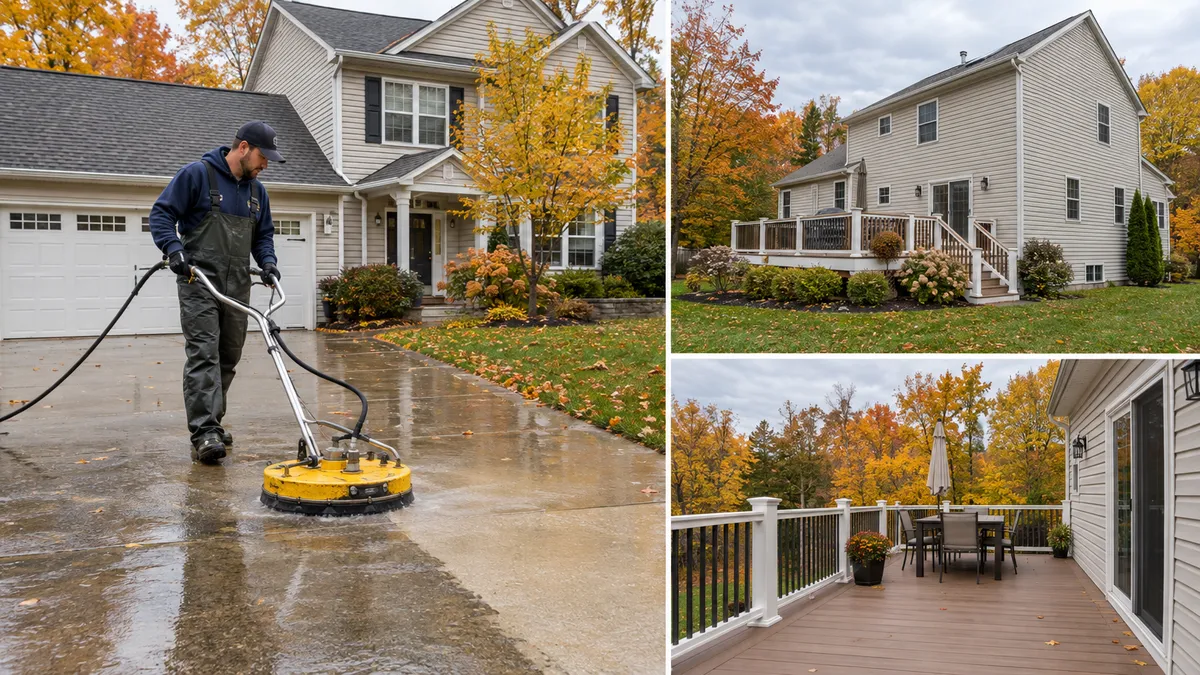
Your Fall Exterior Property Maintenance Checklist for Capital Region Homeowners
October in the Capital Region has a way of moving fast. One week the leaves are turning, and the next there's frost on the driveway and a cold rain that doesn't quit. The window between summer's end and the first hard freeze is shorter than most homeowners realize — and it's the best time to take stock of your property's exterior before winter takes over.
This checklist is designed for homeowners in Albany, Troy, Clifton Park, Latham, Watervliet, Delmar, and surrounding communities who want to protect their investment before the cold sets in. These aren't cosmetic tasks. Done right, fall exterior maintenance prevents real damage and reduces what you'll have to deal with come spring.
Why Fall Exterior Maintenance Matters in Upstate New York
Upstate New York winters are hard on exterior surfaces. Freeze-thaw cycles crack concrete, moisture trapped under algae and grime on siding works its way into the material, road salt migrates up driveways and walkways, and organic debris sitting on roofs all winter creates conditions for accelerated wear.
The logic of fall cleaning is straightforward: you're removing everything that winter will use against your property. Mold, mildew, algae, oil, dirt, and decomposing leaves all hold moisture. When temperatures drop, that moisture freezes and expands — and that expansion causes damage inside the very surfaces you're trying to protect.
Getting ahead of that cycle each fall is one of the most cost-effective things a Capital Region homeowner can do.
The Fall Exterior Maintenance Checklist
1. House Washing — Siding, Fascia, and Soffits
By the time fall arrives, your home's exterior has collected a full season of pollen, mold spores, algae, and grime. That accumulation isn't just unattractive — it holds moisture against your siding and can degrade the surface over time, especially on wood, vinyl, and fiber cement.
A professional house wash before winter removes that biological layer and leaves your siding clean going into the cold months. Pay attention to the north-facing sides of your home, which tend to stay damp longer and accumulate algae and mildew more quickly than sun-exposed sides.
Don't forget fascia boards and soffits. These areas collect debris and moisture near your roofline and are often skipped during quick cleanups.
2. Roof Inspection and Cleaning
If you have dark streaks running down your shingles, those are almost certainly algae — specifically Gloeocapsa magma, a type of cyanobacteria that feeds on the limestone filler in asphalt shingles. Left untreated over multiple winters, algae accelerates shingle wear and can reduce the effective life of your roof.
Fall is a practical time to have your roof cleaned because organic debris — leaves, seed pods, moss — accumulates throughout the season and should be removed before it sits under snow for months. A professional soft wash treatment uses low pressure and appropriate cleaning solutions to eliminate algae and organic growth without damaging shingles.
While you're at it, check gutters and downspouts. Clogged gutters in winter lead to ice dams, which push water back under shingles and into your roofline — one of the more expensive repair scenarios a homeowner can face.
3. Concrete Driveway and Walkway Cleaning
Your driveway takes more abuse than almost any other surface on your property. Engine oil, tire marks, road salt residue from last winter, and biological growth all break down the concrete surface over time. Those stains also create slip hazards when wet or icy.
Fall concrete cleaning removes embedded contaminants before winter arrives. This matters especially for oil and grease stains — these materials can remain soft under frozen conditions and allow water to seep deeper into the concrete, contributing to cracking when freeze-thaw cycles begin.
Walkways, front steps, and the apron where your driveway meets the street are also worth cleaning. These high-traffic areas accumulate grime quickly and are often the first thing guests and visitors notice.
4. Deck and Patio Cleaning
Wood and composite decks need to go into winter clean. Leaf debris, algae, and mildew that sit on a deck surface through freezing and thawing temperatures cause staining, surface degradation, and in the case of wood decks, rot and splitting.
A thorough deck cleaning before you put your outdoor furniture away removes the organic material that accelerates that damage. For wood decks, this is also the right time to evaluate whether sealing or staining is needed — a clean surface is required before any protective treatment can be applied effectively.
Concrete patios and paved areas benefit from the same treatment. Algae-covered concrete is dangerously slippery in the rain and becomes even more so when temperatures hover near freezing.
5. Exterior Walls, Entryways, and Garage Doors
Your front entry and garage doors are among the most visible features of your home. Dirt, oxidation on painted or metal surfaces, and general grime accumulate throughout the year and are easy to overlook since they're right in front of you daily.
A targeted cleaning of entryways, garage door panels, and surrounding trim costs relatively little effort compared to the visual impact — and it removes the grime that holds moisture against door frames and hardware through winter.
6. Fencing and Retaining Walls
Vinyl fencing holds up well in Upstate winters, but algae and mildew growth will cause discoloration over time. Wood fencing is more vulnerable — organic growth on wood holds moisture against the material, accelerating deterioration.
Retaining walls, especially concrete block or stone, tend to collect soil, moss, and organic debris along their faces. Cleaning them in fall keeps drainage pathways clear and removes material that can freeze and expand against the wall face through winter.
7. Gutters and Downspouts
This one sits at the intersection of exterior maintenance and preventing expensive interior water damage. Gutters clogged with fall leaves and debris will overflow during heavy rain and direct water against your foundation, fascia, and siding. In winter, blocked gutters contribute directly to ice dam formation.
Clean gutters in late fall — ideally after the bulk of leaves have fallen in your area — so they're clear heading into the freeze season. While clearing debris, check that downspouts are directing water away from the foundation, not pooling at the base of the house.
8. Foundation and Perimeter Areas
Take a walk around your home's foundation after a cleaning and look for soil, mulch, or debris buildup against the foundation walls. Organic material against the foundation holds moisture, and that moisture, if it finds any crack or gap, can cause real problems once freeze-thaw cycles begin.
Pressure washing the foundation perimeter removes those materials and gives you a clear view of the foundation surface — which makes it easier to spot any new cracks or concerns that should be addressed before winter.
What Order Should You Do It In?
For efficiency, work top to bottom and outside to in:
- Roof and gutters first
- House washing — siding, fascia, soffits
- Deck and patio cleaning
- Driveway and walkways
- Fencing, retaining walls, and foundation perimeter
- Entryways and garage door detail
This order ensures that anything cleaned from the roof or siding doesn't land on already-cleaned lower surfaces.
DIY vs. Professional Exterior Cleaning
Some of these tasks — like clearing gutters or sweeping a patio — are reasonable DIY projects. Others carry real risk or require equipment and technique that most homeowners don't have.
Roof cleaning, in particular, should not be a DIY project. Working on a pitched roof is dangerous under normal conditions, and the wrong cleaning approach can void a shingle warranty or damage the surface. Likewise, concrete cleaning with an undersized or improperly used pressure washer often leaves streaking or surface damage that's difficult to reverse.
Professional exterior cleaning services bring the right equipment, experience on different surface types, and appropriate cleaning solutions for each job — which means faster results and surfaces that are genuinely clean rather than just rinsed.
The Cost of Skipping It
The argument for doing nothing is that it's cheaper in the short term. But a Capital Region winter is not kind to neglected exterior surfaces.
Algae and mold on siding and roofing aren't cosmetic issues — they're biological processes that continue breaking down materials. Oil and chemical residue in concrete doesn't disappear; it keeps working its way deeper into the surface. And moisture trapped under grime doesn't have anywhere to go when temperatures drop — it expands inside whatever it's in contact with.
Annual fall exterior maintenance is one of those home investments where the cost of doing it is consistently lower than the cost of the repairs it prevents.
Get Your Property Ready Before Winter
If your home's exterior could use attention before the cold arrives, Under Pressure Washing 518 serves homeowners and property owners throughout the Capital Region — including Albany, Troy, Clifton Park, Watervliet, Latham, and Delmar. From house washing and driveway cleaning to roof soft washing and deck cleaning, the team handles the full scope of exterior property maintenance.
Request a free estimate and get your property checked off the list before winter closes in.
