Pressure Washing vs. Soft Washing: What's the Difference and Which One Does Your Property Need?
You've noticed the grime building up on your siding, the dark stains creeping across your driveway, or the discoloration spreading along your roof. The natural instinct is to call for a pressure washing — but depending on the surface, that may not be the right call. The method matters just as much as the cleaning itself.
Two primary techniques are used in professional exterior cleaning: pressure washing and soft washing. Understanding the difference can save your surfaces from damage and make sure you're getting the right result for your property.
What Is Pressure Washing?
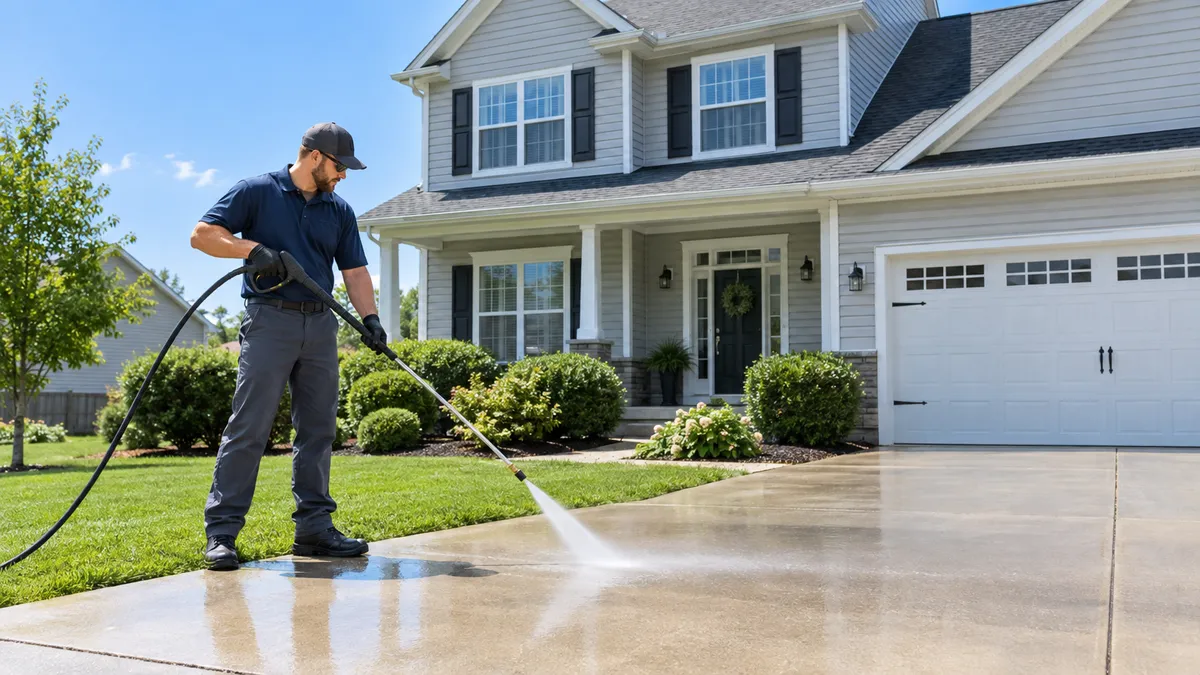
Pressure washing uses highly pressurized water — typically delivered at 1,500 to 3,500+ PSI (pounds per square inch) — to blast dirt, grime, mold, stains, and debris from hard surfaces. The cleaning power comes primarily from the force of the water itself.
This method is highly effective on dense, durable surfaces that can withstand the force without sustaining damage. Common examples include:
- Concrete driveways and parking areas
- Sidewalks and walkways
- Brick and stone surfaces
- Concrete patios
- Retaining walls
- Garage floors
When a driveway is covered in oil stains, embedded dirt, or years of buildup, high-pressure water is usually the most effective way to restore it. The surface density of concrete and masonry can handle the impact, and the force helps lift what gentle rinsing never could.
What Is Soft Washing?
Soft washing uses low water pressure — sometimes comparable to a standard garden hose — combined with specially formulated cleaning solutions to break down and remove organic growth, stains, and contamination at the surface level. The cleaning power comes from the chemistry, not the force.
The solutions used in soft washing are designed to kill algae, mold, mildew, moss, lichen, and bacteria at the root, preventing them from returning quickly. Because the water pressure is low, the method is safe for surfaces that would crack, chip, dent, or absorb damage under high pressure.
Surfaces where soft washing is typically the right approach include:
- Vinyl, wood, and fiber cement siding
- Roofs (asphalt shingles, metal roofing)
- Painted surfaces
- Stucco
- Cedar shake and wood paneling
- Windows and screens
- Awnings
Why the Distinction Matters
Using high pressure on the wrong surface can cause real harm. Asphalt shingles can lose granules and wear prematurely. Siding can crack, warp, or allow water to infiltrate behind the panels. Wood surfaces can be splintered or gouged. In some cases, high-pressure cleaning can actually drive moisture into areas where it causes long-term structural problems.
On the other hand, soft washing alone on heavily stained concrete typically won't deliver the same deep clean that pressure can. The right method for the job depends on the surface material, the type of contamination, and the condition of what's being cleaned.
Professional exterior cleaners understand these distinctions and adjust their approach based on what your property actually needs — not a one-size-fits-all method.
Which Method Is Right for Your Property?
Here's a practical guide for common exterior surfaces:
Driveways and Concrete Surfaces
Use: Pressure Washing
Concrete is dense and durable. High-pressure cleaning effectively removes tire marks, oil stains, mildew, and ground-in dirt. For heavily stained driveways around the Capital Region, professional pressure washing typically delivers the most dramatic results. Learn more on our services page.
House Siding
Use: Soft Washing (in most cases)
Vinyl, fiber cement, and wood siding should typically be cleaned using low pressure and appropriate cleaning solutions. This removes mold, algae, and dirt without risking water intrusion behind panels or surface damage. Older or deteriorating siding especially warrants a gentler approach.
Roofs
Use: Soft Washing
High-pressure washing on an asphalt roof can strip granules from shingles, void manufacturer warranties, and significantly shorten the roof's lifespan. Soft washing with the right cleaning solution kills the algae and moss causing those dark streaks — without the damage that pressure would cause.
Decks and Patios
Depends on Material
Concrete and natural stone patios can often handle moderate pressure. Wood and composite decking generally require much lower pressure and careful technique to avoid raising wood grain, splintering, or damaging the composite structure. A professional assessment of the material and condition helps determine the right pressure level.
Commercial Exteriors and Storefronts
Depends on Surface
Commercial properties often have a mix of surfaces — concrete walkways, brick facades, metal fixtures, glass entryways, and painted walls. A professional commercial exterior cleaning approach uses the right method for each zone rather than applying uniform pressure across everything.
Can Both Methods Be Used on the Same Property?
Yes — and often, the answer for a complete property cleaning is a combination of both. A typical residential exterior cleaning job might involve soft washing the siding and roof while pressure washing the driveway, walkways, and patio. Using the appropriate technique for each surface is the mark of a thorough, professional job.
What to Ask When Hiring an Exterior Cleaning Company
Before hiring anyone to clean your home or commercial property, a few questions are worth asking:
- Do you assess each surface before choosing your method?
- Do you offer both pressure washing and soft washing?
- What cleaning solutions do you use, and are they appropriate for my surface type?
- Are you experienced with my specific siding, roofing, or surface material?
A reputable exterior cleaning company will take the time to evaluate what your property actually needs — and be transparent about the approach before starting any work.
Serving the Capital Region the Right Way
At Under Pressure Washing 518, we work with homeowners and businesses throughout Albany, Troy, Watervliet, Clifton Park, Latham, Delmar, and the surrounding Capital Region. We assess each surface and apply the method that's right for it — whether that's high-pressure concrete cleaning or a careful soft wash on your home's siding and roof.
If your driveway, siding, roof, or commercial exterior could use professional attention, we'd be glad to help. Request a free estimate from Under Pressure Washing 518 and find out which approach is right for your property.
