What's Really Dragging Down Your Home's Curb Appeal (And How to Fix It)
Your yard looks tidy. The mulch is fresh. The flowers were trimmed back for fall. So why does the house still look a little… off?
Most of the time, the answer isn't landscaping — it's the surfaces themselves. Dirty siding, stained driveways, grimy walkways, and buildup on roofs and gutters can quietly drain your home's visual appeal no matter how well everything else is maintained. And because the change happens gradually, it's easy to stop noticing it until a neighbor mentions it or a real estate agent brings it up before a showing.
Here's a look at the biggest exterior cleaning culprits that hurt curb appeal — and what actually fixes them.
Why Curb Appeal Is More Than Landscaping
A lot of homeowners think about curb appeal in terms of what's growing in the yard. But the eye naturally gravitates to large, flat surfaces first: the house itself, the driveway, the walkway, the roofline. When those surfaces are dark, stained, or streaked, the whole property looks tired — even if everything else is well-maintained.
In the Capital Region, that aging happens faster than in many other parts of the country. Cold winters, road salt, wet springs, and humid summers create ideal conditions for algae, mold, mildew, and grime to accumulate on every exterior surface. What looked fine in September can look noticeably worse by late October after a few weeks of rain and falling leaves.
The Biggest Curb Appeal Culprits
1. Dirty or Stained Siding
Siding is the largest visible surface on most homes, which means it has the most impact when it's dirty. Green algae growth along north-facing walls, dark mildew streaks near the roofline, and general grime from road traffic and weather can make a home look years older than it is.
Vinyl, wood, fiber cement, and aluminum siding all attract organic growth over time. Professional house washing — typically using a soft wash method with low pressure and appropriate cleaning solutions — removes these stains effectively without damaging the surface. After a professional cleaning, the difference is usually immediate and dramatic.
2. A Stained or Discolored Driveway
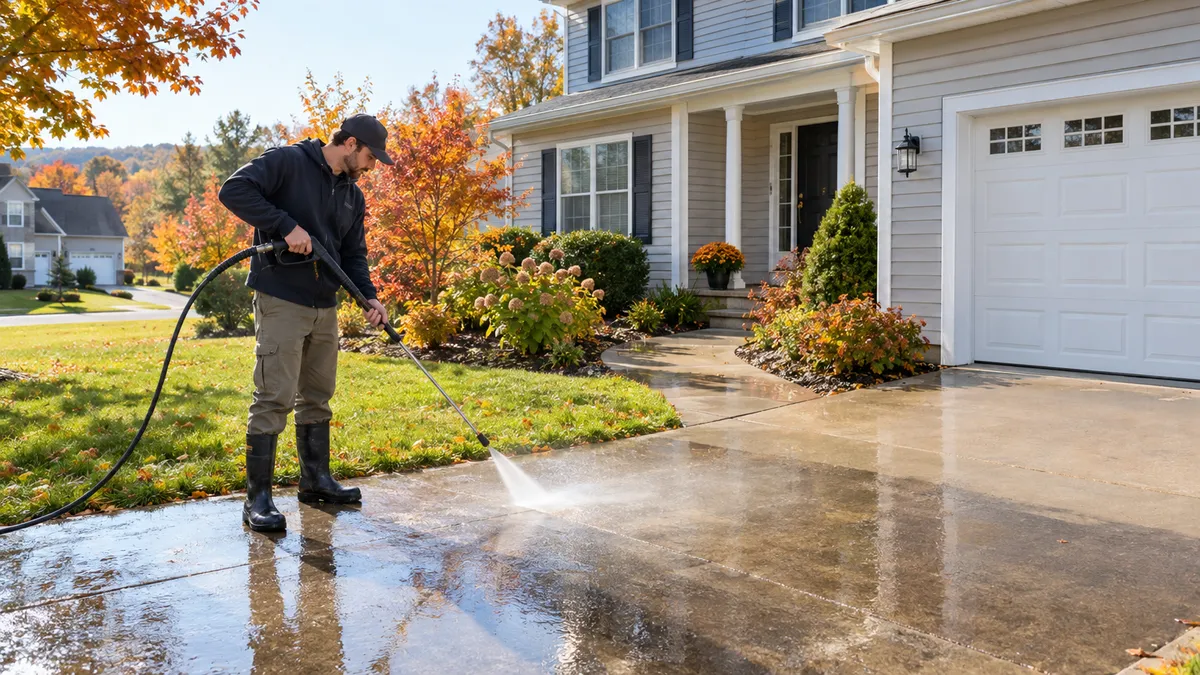
Concrete driveways start out looking clean and light. Over time, oil drips, tire marks, leaf tannins, algae, and general weathering leave them looking dark, patchy, and uneven. A stained driveway doesn't just look bad on its own — it pulls the eye toward the negative as soon as someone views the property from the street.
Professional concrete and driveway cleaning using a surface cleaner attachment restores driveway color dramatically. The results are particularly noticeable on lighter-colored concrete that has gone gray or greenish over the years. It's one of the highest-impact improvements available for a home's first impression — and it doesn't require any renovation, just a thorough cleaning.
3. Grimy Walkways and Entry Steps
The path from the street to your front door is the route every visitor, mail carrier, and prospective buyer travels. When that path is stained, slippery with algae, or edged with dark buildup, it sets a tone before anyone even reaches the front door.
Walkways and entry steps accumulate the same kinds of organic growth as driveways — often with more moisture in shaded or north-facing areas. Cleaning them as part of a comprehensive exterior cleaning visit, rather than just focusing on the house itself, completes the curb appeal picture in a way that's hard to achieve otherwise.
4. Dark Streaks on the Roof
Those dark lines running down your shingles are almost always algae — and they spread over time if not addressed. From the street, a streaked or stained roof makes a home look neglected. It also raises questions in a buyer's mind about whether the roof itself is in good condition.
Roof cleaning using a soft wash approach — low pressure with appropriate cleaning agents — removes algae growth without damaging shingles. If you've noticed dark streaking on your roof, it's worth addressing before it spreads further or affects the look of the entire roofline.
5. Dirty or Green-Tinged Gutters
Gutters run the entire perimeter of the roofline, which means they're quite visible from the street. When gutters develop green algae streaks or dark staining down their faces, it adds another layer of visual noise to an already tired-looking exterior.
Cleaning the exterior faces of gutters is often part of a professional house wash visit. It's a detail that doesn't get much attention on its own, but contributes noticeably to the overall polished look once the rest of the exterior is clean.
6. Fences, Retaining Walls, and Hardscapes
Vinyl fences turn gray and green. Wood fences develop mildew and tannin stains. Brick retaining walls collect moss and algae. These surfaces sit at the edges of a property, but they're still part of what someone sees when they view the home from the street.
Pressure washing or soft washing these surfaces as part of a broader exterior cleaning visit ties the whole property together visually. A bright, clean fence alongside a freshly washed house and driveway creates a coherent, well-maintained impression that landscaping alone can't achieve.
How Much Difference Does Exterior Cleaning Actually Make?
It's common to underestimate the impact until it's done. Homeowners who schedule a professional exterior cleaning before listing a property often describe the result as looking like the house had a fresh coat of paint — without the cost or the project timeline. Real estate professionals consistently recommend exterior cleaning before listing because first impressions at street level directly influence buyer interest and perceived value.
Even for homeowners not planning to sell, clean exterior surfaces make a home more enjoyable to come home to, reduce the perception of deferred maintenance, and — in many cases — prevent biological growth from causing real surface damage if left in place too long.
When to Schedule Exterior Cleaning for Curb Appeal
Late fall in the Capital Region is a reasonable time to address curb appeal, even if it feels counterintuitive. Temperatures haven't yet dropped to levels that prevent professional cleaning, and removing organic growth now means it won't sit on surfaces through months of cold and moisture.
Spring is the other natural window — after winter grime, road salt residue, and accumulated debris from the season have settled on every surface. Many homeowners choose spring for the motivational aspect of refreshing the property heading into warmer months.
The most important factor is consistency. Exterior surfaces that are cleaned on a regular schedule stay cleaner longer and are easier to maintain each time. Letting buildup go multiple years makes each cleaning more involved and gives organic growth more time to cause underlying issues.
Getting the Right Approach for Each Surface
Not every surface requires the same treatment. High-pressure washing is appropriate for concrete driveways and walkways but can damage vinyl siding, wood, or asphalt shingles if applied incorrectly. A professional exterior cleaning company will assess each surface and choose the right method — pressure washing, soft washing, or a combination — for safe, effective results.
Under Pressure Washing 518 serves homeowners throughout the Capital Region, including Albany, Troy, Watervliet, Clifton Park, Latham, Delmar, and surrounding communities. Whether it's a full exterior cleaning, a driveway, a roof, or a specific surface that's stood out, the team can assess what's involved and put together a plan that makes sense for your property.
Ready to see what a professional cleaning can do for your home's curb appeal? Explore our services or request a free estimate — we'll take a look at your property and walk you through your options.
